When Should You Retest Your Lactate Threshold?
A single lactate test tells you where you are today. Here are some principles to guide you as to when a retest is valuable.
Retest after a block, not on a calendar
The reason to retest is to answer a question your training has posed. You did a block of focused work. Did it move the needle, and which part of your physiology responded?
Retesting on a fixed calendar with no real training stimulus in between is a mistake. You will still get a valid reading of where you are, but you are paying to confirm numbers that have had no reason to move. Spend on the test when you have given your body something to show you.
Do not retest within six weeks
There is a lower limit. Even inside a good training block, retesting too soon tells you little because physiological adaptation takes time to appear.
As a rule, leave at least six weeks between tests. Inside that window there has usually not been enough adaptation for change. Retest at four weeks and you risk reading day-to-day fluctuation as progress or missing a real gain that simply has not shown up yet. Six to eight weeks after starting a focused block is usually the earliest point where a retest reflects genuine change.
Rough cadence and why elite athletes differ
For most athletes doing structured training, a retest every eight weeks or so works well, lining up with the length of a typical block. Several of our clients test on exactly this rhythm, retesting after each block to see what it produced and to reset their targets for the next one.
Elite athletes often test more frequently, around every six weeks. That is not because everyone should. It is because training is their job, the blocks come thick and fast, and at that level the marginal gains are small enough that they need frequent measurement to catch them. For someone with a life outside sport, every eight weeks after a block is plenty, and there is no prize for testing more often than your training justifies.
What a retest actually shows: two real examples
Two of our clients show the two different things a retest can reveal.
The first came back from injury and spent eight weeks on targeted anaerobic work, with one hard interval session a week. Her retest showed her anaerobic threshold had climbed from 12.7 to 14.3 km/h. A large, clear gain, because she had trained that specific system hard and the retest caught it. We wrote about her in How Quickly Can You Improve Your Lactate Threshold?.
The second tells a quieter but just as useful story. He spent ten weeks building his aerobic base in his off season. His retest showed his aerobic threshold had moved from 10.3 to 10.8 km/h. That is a small number, and it is also close to the realistic ceiling for how much the aerobic threshold can shift in ten weeks. His anaerobic threshold rose too, from 13.8 to 14.4, but here is the interesting part: he could have pushed his anaerobic threshold harder. He chose not to and prioritised his base in the off season so that it could support bigger anaerobic gains later in the year.
That is the kind of decision a retest makes possible. Without the numbers, he would not have known whether his base block worked, and he would not have had the evidence to hold back on the anaerobic work in good conscience. For why an athlete would prioritise the base this way, see What an Elite Hyrox Athlete's Lactate Profile Actually Looks Like.
Notice the contrast between the two. One athlete moved her anaerobic threshold by 1.6 km/h. The other moved his aerobic threshold by half that, and that was near its limit. Different markers move by different amounts.
After a retest, update your zones
If your retest shows your thresholds have moved, your old training zones are now out of date. The numbers that were right eight weeks ago will have you training slightly too easy or too hard today.
So the practical payoff of a retest is not just the knowledge that you improved. It is that you can take your new thresholds and update your watch zones to match them, so your next block is trained against who you are now rather than who you were. The athletes who get the most from testing are the ones who test, train against the numbers, retest after the block, update their zones and go again. It compounds.
When a retest is worth it
To put it simply: if you are planning a structured training block and a real period of focused work, then yes, a retest at the end of it makes sense. It will tell you whether the work paid off and reset your targets for what comes next. If you are ticking over without a plan, or it has been less than six weeks, wait until you have given your body a reason to show you something.
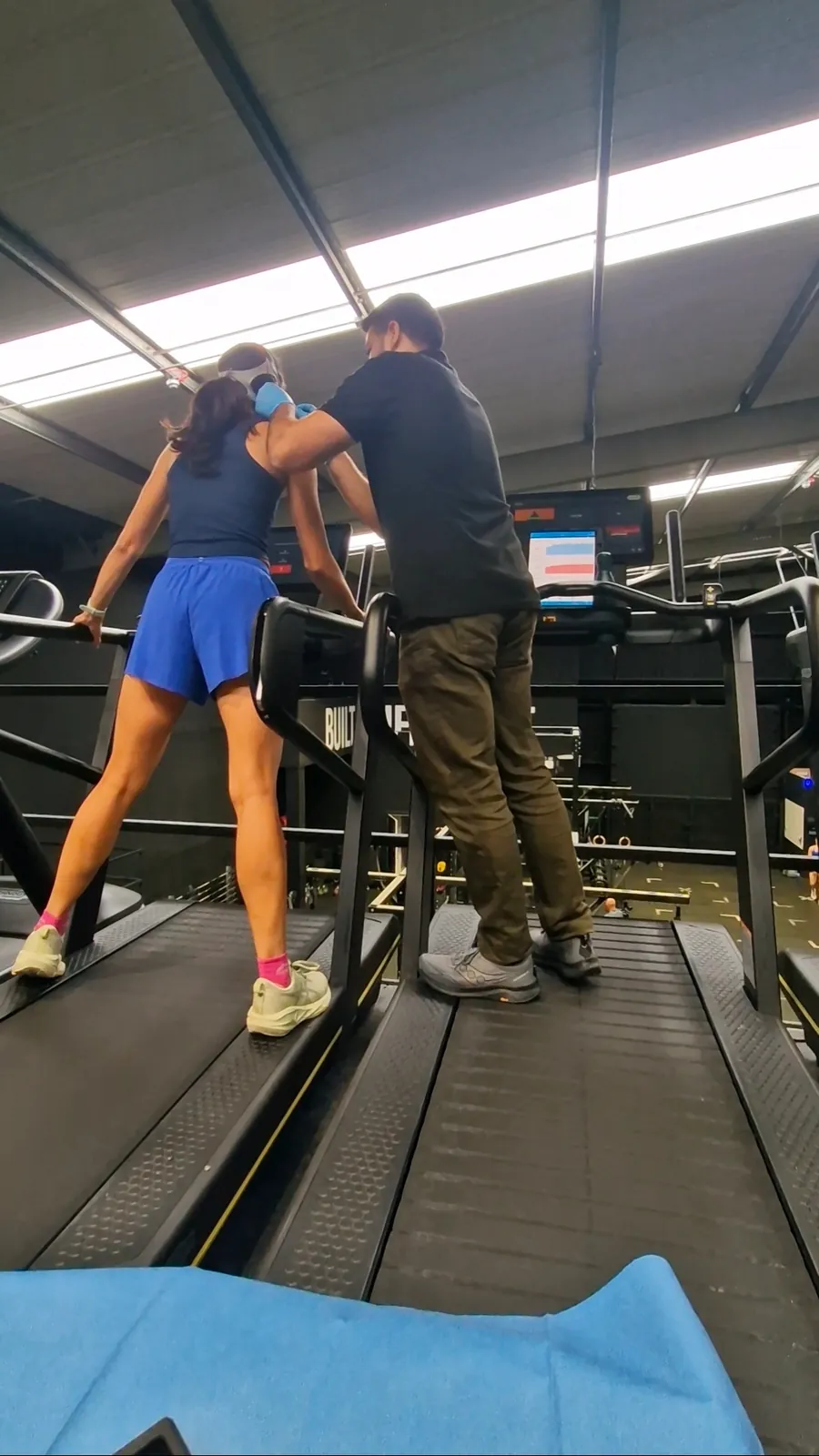
We test at Team Rees in Caerphilly and KORE Gym in Newport. For a first test or a retest after your latest block, the test gives you your current thresholds in pace or power and heart rate, ready to train against.
See current pricing and book your test
For how much your thresholds can realistically move in a block, read How Quickly Can You Improve Your Lactate Threshold?.
Ready to find your lactate threshold?
Book a test at one of our partner gyms and get a personalised training zone report.
Book a Test