
Short answer: I don't think so.
Using a reliever inhaler for diagnosed asthma is not doping in any practical sense. WADA allows inhaled salbutamol up to set limits, and trials in healthy people found no significant effect of inhalers on endurance, strength or sprint performance. An inhaler brings your airways back to normal and doesn't take you above normal.
This argument comes up constantly, so here is my position and the evidence behind it. I'm Team Inhaler!
Why endurance athletes get tight airways
Hard exercise means huge volumes of air moving fast, mostly through the mouth. That air is cooler and drier than the lungs likes and in cold weather it is worse. In people prone to it, the airways tighten. This is called exercise-induced bronchoconstriction, and it is common with Asthma and also often underdiagnosed in endurance sport.
The symptoms are wheeze, cough, a tight chest and breathlessness out of proportion to effort. A reliever inhaler relaxes the airway muscle and reopens the airways so you can breathe comfortably again.
Doping concerns
The concern is muscle, not lungs. This drug class can have effects on muscle when enough of it reaches the bloodstream. That is why oral and injected forms are banned outright, and why inhaled salbutamol is allowed only up to a limit. (1600 micrograms over 24 hours, and no more than 600 micrograms in any 8 hours under the 2026 list.)
The research matches that logic. A 2011 meta-analysis of randomised trials found no significant effect of inhaled β2-agonists on endurance, strength or sprint performance in healthy athletes. Across 16 studies there was no effect on VO2max either. A later analysis of anaerobic performance did find small gains in sprint and strength in people without asthma, and that is where the doping debate comes from. Those gains are tied to systemic exposure, and not to a normal puff or two of a reliever.
Nothing in the evidence suggests an inhaler improves the aerobic system.
An inhaler dose doesn't reach your muscles
One puff of a standard salbutamol inhaler is 100 micrograms. The usual dose before exercise is one or two puffs. The packet states a dose, but most of what you inhale lands in the mouth and throat and is swallowed, so only a small share reaches the lungs. Very little of it gets into the bloodstream, let alone to the muscle in any quantity.
The inhaler is built to act locally, on the airway wall where the problem is. That design is why it opens airways without doing anything measurable for performance in a healthy person.
What this looks like in a real test
This is Luke's test. The yellow line is the volume of air he breathes each minute. It should keep climbing but near maximal intensity it starts to fall instead. His asthma was triggered, and he felt wheezy and tight-chested.
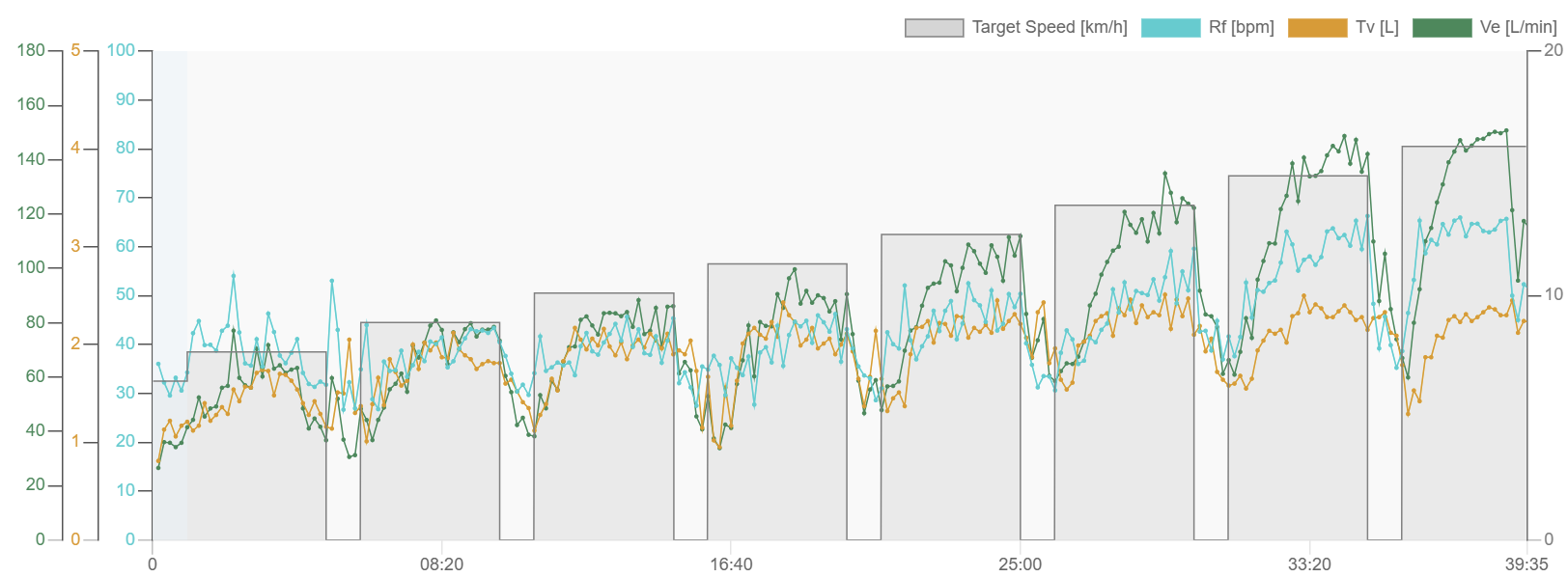
If he had used his inhaler beforehand, he would have had a better chance of breathing normally through the whole test. Normal, not better than normal.
(One caution- a drop in breathing at peak effort isn't always asthma. Exercise-induced laryngeal obstruction can look similar, with a noisy breath in and a tight throat. Also I am a doctor but this isn't medical advice it's just me observing what we have seen in athletes that we know have asthma. I think that covers me, probably.)
Book a test at your nearest gym partner
Sources
Ready to find your lactate threshold?
Book a test at one of our partner gyms and get a personalised training zone report.
Book a Test