Why You Blow Up in the Second Half of a Hyrox (And How to Fix It)
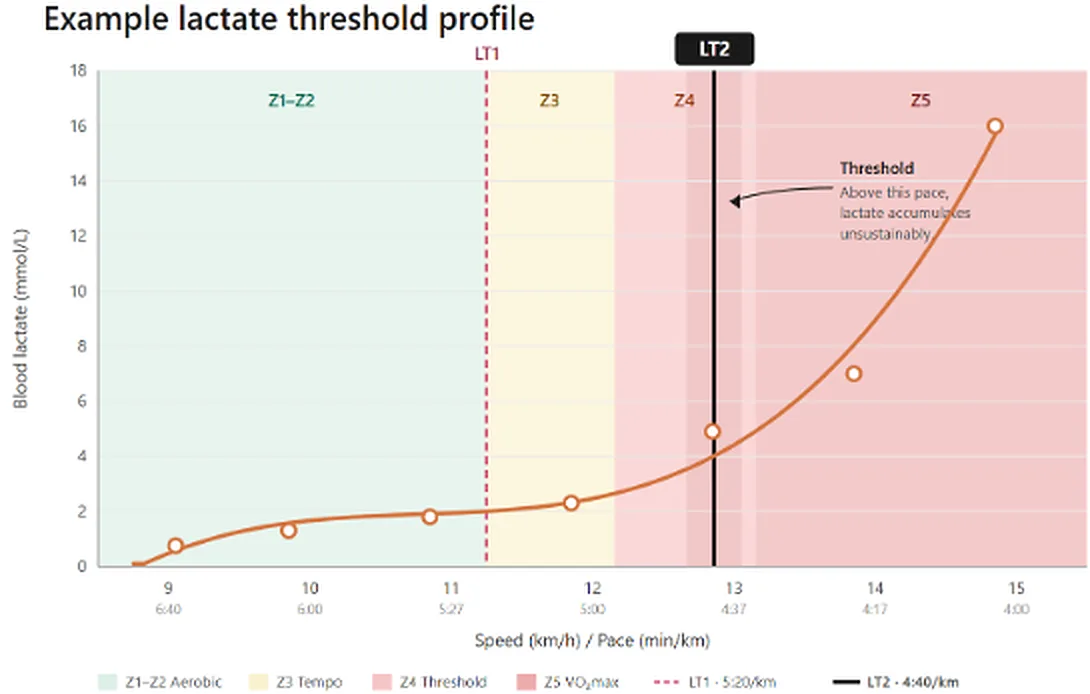
Most athletes who blow up in the back half of a Hyrox do so for one specific physiological reason: they spent the first half above their lactate threshold without realising it and the stations gave them no chance to clear it. The solution isn't more fitness, it is pacing the run segments below threshold and treating the stations as the lactate spikes they are.
What actually happens to your body in the second half
The mechanism is the same almost every time we see it in the data.
Many will start their first run already 10 to 15 seconds per kilometre above their LT2 (lactate threshold). Fast enough that lactate is accumulating from the first 200 metres but slow enough that you don't notice. You then hit the first few stations with already elevated blood lactate in the system. The station itself pushes you to near maximal effort, which spikes lactate further.
Lactate clearance takes longer than 30 seconds. Specifically, clearing a meaningful amount of accumulated lactate while still working takes 2 to 4 minutes of a sub-threshold effort, depending on your aerobic fitness. If you aren’t doing this, each lap adds more lactate than your system can clear.
By station three or four, the system is saturated. Your effort climbs without any change in pace and your heart rate keeps drifting up while your legs feel heavier. You may not be able to recover for the rest of the event.
This is the pattern we see across almost every athlete who's blown up at a Hyrox. It isn't a fitness problem and the giveaway is that the same athlete can hold a meaningful aerobic effort for an hour in training but falls apart in the competition.
The pacing mistake that causes it
There are three errors that produce this pattern.
Going out at "moderate" effort. Perceived effort is a poor guide on a fresh tapered body in a competitive environment. What feels moderate at the start line is usually significantly above your actual threshold pace. Adrenaline masks the real effort, and the first 500 metres often goes 15 to 20 seconds faster than the athlete intends.
Pacing off the athletes around you. Others will be going out too fast as well. If they're stronger they'll pull you above your threshold; if they're weaker but adrenaline fuelled they'll still pull you above yours. Either way it is easy to end up racing someone else’s race.
Treating the run segments as the rest between stations. This is the mistake most athletes don't realise they're making. Runs done above threshold are the opposite of rest. They add lactate on top of what the stations have already produced and they're also where most of your race time is spent. Runs done below threshold do recover you between stations because clearance outpaces accumulation. The difference between those two scenarios is usually only 10 to 15 seconds per kilometre of pace. That's the entire margin between blowing up and finishing strong.
How to pace it properly
The prescription is straightforward once you know your LT2 threshold.
Run the first half of each run segment at 5 seconds per kilometre slower than your LT2 pace. Not faster. The instinct will be to push because you feel fresh and the pace feels too easy. Trust the data. The athletes who pace this way almost always reach the halfway point feeling like they haven't started racing yet and then they pass everyone in the back half.
Treat stations as max efforts but plan the transition. The 30 to 60 seconds after a station, before the next run picks up, are clearance time. Move through them deliberately, not a sprint to make up time. The seconds you "lose" in transition come back in the next run segment because your legs aren't saturated.
Negative split the whole race. The fastest Hyrox times we've seen from athletes who've tested don't come from going out hard and hanging on. They come from running around 5 seconds per kilometre slower in the first half than in the second, station by station. The race feels backwards easy at the start, fast at the end. That's the shape it should have.
We've watched athletes take five minutes off a Hyrox PB doing nothing more than pacing the run segments five seconds per kilometre slower in the first half. They didn’t get any fitter, they just stopped racing above threshold.
What this looks like in the data
The signal is in the heart rate drift. An athlete who's paced correctly will see their heart rate climb steadily across the race with stations producing visible spikes that recover between them. An athlete who's blown up will see heart rate rise sharply in the first three stations, plateau at near max and stay there with perceived effort climbing while pace drops.
The other signal is pace consistency on the runs. A correctly paced race will show runs that are either flat or slightly negative-split with each run a second or two faster than the last as the athlete settles in. A blown-up race will show the opposite: runs that start fast and get progressively slower with the gap between run one and run six often 30 seconds per kilometre or more.
If you race with a watch that captures lap data, look at those two numbers after your next race. They'll tell you which side of the threshold line you were on.
When to test
The pacing strategy in this post only works if you know your LT2. A test gives you that number directly, along with the correct heart rate range that corresponds to it.
Use the pace as your primary target on the runs. Heart rate is useful as a secondary signal. It'll tell you when you're working harder than the pace suggests which on race day can happen for several reasons (adrenaline early on, caffeine, heat, cardiac drift through the back half). If your HR is below LT2 but you're already at LT2 pace, you're well-paced and probably going to have a great race.
Ideally you'd test 8 to 12 weeks out from a target Hyrox, which gives you time to train at the new threshold and get familiar with what the pace feels like. Closer works too, see Do You Actually Need a Lactate Threshold Test? An Honest Answer for the full breakdown on timing.
If you want to see what the report looks like before booking, What's Actually in a Lactate Threshold Test Report walks through a real anonymised example.
A Hyrox raced on data feels different from a Hyrox raced on feel. The first half feels too easy. The back half feels like the race you trained for. We test Hyrox athletes from across South Wales in Caerphilly, book a session here when you're ready.
Ready to find your lactate threshold?
Book a test at one of our partner gyms and get a personalised training zone report.
Book a Test