What's Actually in a Lactate Threshold Test Report
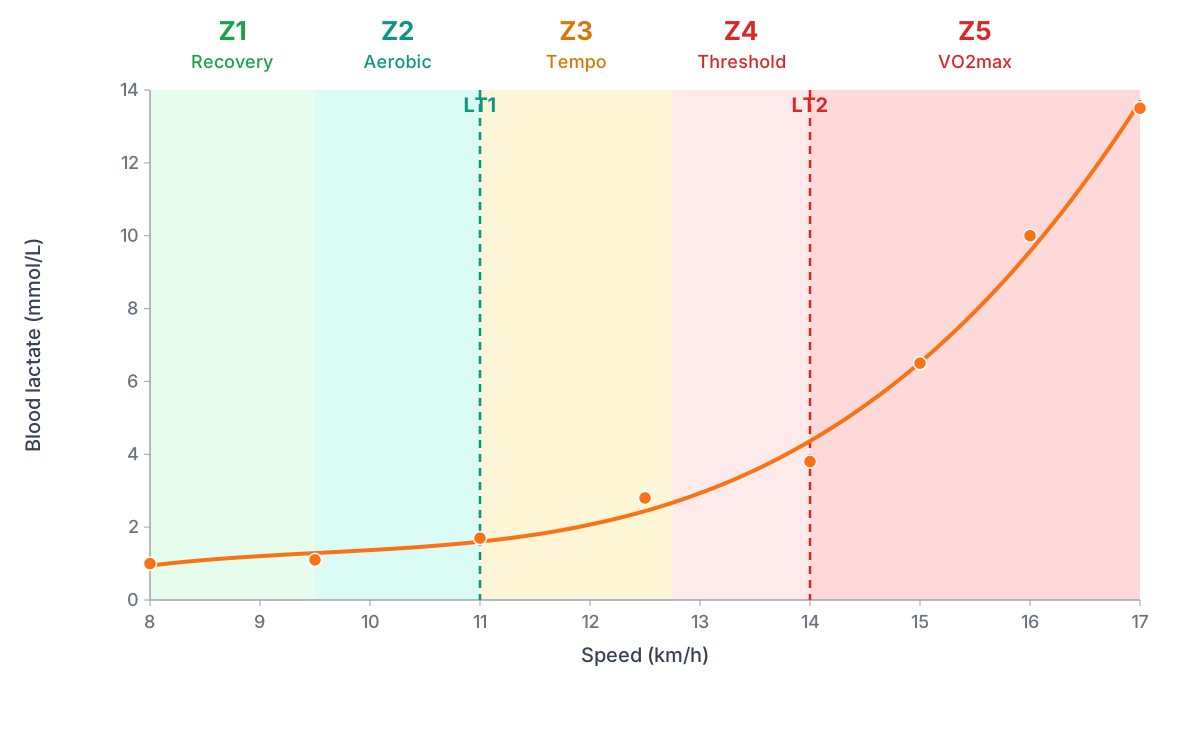
A standard lactate threshold test gives you three main things: the heart rate and pace where your body shifts from clearing lactate efficiently (Lactate Threshold 1), the heart rate and pace where you tip over into unsustainable effort (Lactate Threshold 2) and the five training zones that follow from those two numbers. Everything else in the report is there to help you act on those numbers in your next training block.
This information is key for your FitnessCheck report which is then highly personalised for your unique goals.
“At a glance”: what matters most to you on one page
The first section is a summary. Before and/or during the test, we learn what you want most from it. If you read nothing else, this page has to be worth the test fee on its own.
Generally this will involve headline numbers and zones with the important takeaways. A page you can screenshot to your coach or pin to your training log.
Your lactate curve
Page three is the data itself. Lactate readings give us your zones and thresholds.
The shape of the curve is also really important. Two athletes can have the same anaerobic threshold (LT2), say, 4:42/km at 168 bpm but need completely different training because the shape of the curve between their thresholds is different. One may have a long, gentle rise. The other may be flat for ages and then go vertical. The numbers alone don’t show you that which is why we need to generate a curve via mathematical equations.
We annotate it for you. Where the inflections are, what the shape between thresholds is telling you and where each zone sits. This is the page that turns the report from a result into a training document. If you book a repeat test, we will compare your previous data and provide insights into what has worked well and not so well in your last training block.
Analysis
The next section breaks down what each part of the curve means for your training.
LT1 (aerobic threshold), your easy ceiling. The pace and heart rate above which your easy runs stop being easy. Most athletes who get tested find out their "easy" sessions have been too hard for years and in fact are fatigue accumulating. The report gives exact numbers so you can train with maximum efficiency.
The gap between LT1 and LT2. A wide gap means a lot of usable aerobic range, you can train for hours below threshold without paying a metabolic price. A narrow gap means there's barely any room to train aerobically before you tip into hard work. For most athletes who get tested, the fix is more easy volume. A small number have the opposite problem: strong base, low threshold and need more threshold work instead. The test combined with your background tells you which.
LT2 (anaerobic threshold), your “threshold”. The pace and heart rate where the effort stops being sustainable. This is the ceiling of your threshold sessions and roughly your race pace for events between 30 and 70 minutes.
What happens above LT2. Your peak lactate and the intensity that produced it. For Hyrox athletes this matters more than for most. The sleds and burpee broad jumps push you well above threshold and how quickly you recover between stations is partly what decides whether you fade in the second half. More on that in Why You Blow Up in the Second Half of a Hyrox (And How to Fix It).
What to do next (recommendations)
This is where the report stops describing and starts prescribing. Two or three specific changes for the next 8 to 12 weeks depending on your goals.
From a recent report: "As your base is very well developed, you could drop two of your six weekly runs and focus on threshold and above-threshold intervals. Hold your threshold sessions at 168 to 172 bpm rather than the 180+ that you previously targeted." Specific paces, heart rates, and numbers you can use to fine tune your training.
If you're not sure whether you're at the right stage of training to act on this kind of detail, the post on Do You Actually Need a Lactate Threshold Test? An Honest Answer covers when the test is worth it and when it isn't.
Race strategy
If you've got a race in the next 12 weeks, this section reminds you of relevant numbers. Heart rate ceilings and run pace targets for example. (With the caveat that there may be other factors, e.g. carb loading, sleep, caffeine, adrenaline, taper training, menstrual cycles.)
For Hyrox you can target heart rate for the run stations and an upper boundary for the strength stations, at least for the first half.
If you don't have a race booked, this section gets folded into the recommendations and we focus on the training block instead.
When to retest
When to come back (usually 8 to 12 weeks if you're training seriously, 16 weeks if your training is steadier) and what we'd expect to see if the block has worked. Most of the value in lactate testing is in the comparison. The first test is the baseline. The second one tells you whether what you did between them worked.
Appendix
Definitions, the protocol and raw data. All of it there if you want to dig in.
What the report isn't
It isn't a training plan. It's the data your training plan should be built on. The recommendations narrow the gap but a full 12 week block for a Hyrox podium attempt is a different document, written by a coach who knows your lifestyle and your history.
Where to book
We have launched in Caerphilly, serving athletes across South Wales: Cardiff, Newport, the Valleys and out to Bristol. A 60-minute appointment with a full written report and a follow up call if anything is not clear. Book a test here.
If you're still working out whether the test is right for where you are in your training, Do You Actually Need a Lactate Threshold Test? An Honest Answer is the post to read first. If you're already sure, the booking page is the next step.
Ready to find your lactate threshold?
Book a test at one of our partner gyms and get a personalised training zone report.
Book a Test